• Skip to main content
  • Skip to primary sidebar
  • Skip to footer
  • Home
  • Articles & lessons
    • Grammar & vocabulary lessons
    • IELTS preparation
    • British culture
    • All articles and lessons
  • About
  • Contact
Crown Academy of English

English lessons and resources


You are here: Home / English lessons / 3 ways to use the word BUSY

3 ways to use the word BUSY

13th September 2018 by Andrew

Pronunciation of busy:         /ˈbɪz.i/

“busy” is an English adjective. An adjective modifies a noun. An adjective gives us more information about a noun.

We use “busy” to describe 3 different types of noun:

1) A person.
2) A period of time.
3) A place.


In this lesson, we will look at each one in detail with example sentences.

“busy” to describe a person

Meaning:
If a person is busy, they are working hard on something.
A busy person is giving their attention to something.
A busy person is occupied by something. The person is not available.

Examples:
Mark is busy in the kitchen.
Mark is busy cooking.

Notice the form of the above example:
busy + ING form of the verb
busy cooking

The verb in the ING form is the activity that the person is doing. It is why the person is busy!

More examples:

David is busy doing his homework.
David is busy with his homework.

Salesman: Hello, could I speak to Mr Jones please?
Secretary: No, I’m sorry. Mr Jones is busy in a meeting.

Mark: Would you like to go to the cinema?
Jane: No I can’t, I’m busy.

(In the above example, Jane says that she is busy but she doesn’t give any more information or explain why. She says she is busy as an excuse. This is a very common use of “busy” – to refuse an invitation.)

An expression with “busy”

to be busy as a bee.

bee

Explanation: A bee is an insect that works very hard gathering pollen and taking it back to the beehive to make honey. Bees are very active.

Meaning of the expression:
to be very busy.
to be very active.
to have lots of work or things to do.

Example:
Mark: How was your work today?
Jane: There were lots of customers. I was busy as a bee!

(This expression is only for a person.)

“busy” to describe a period of time

Meaning:
A busy period of time has lots of activity. Lots of things are happening.

Example sentences:

Next week will be busy.

Christmas is a very busy time of the year.

Mark: How are you?
Jane: I’m exhausted. I have had a busy day.

“busy” to describe a place

Meaning:
A busy place has lots of people or activity. There are often crowds of people.

Examples:

The restaurant is busy today.

restaurant

I hate London. It’s always so busy!

Busy London

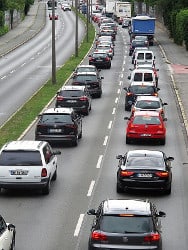
This road is very busy.

traffic jam

(A busy road has lots of traffic. If a road is busy, you should be careful when you cross it.)

More lessons

The difference between AFFECT and EFFECT
Prepositions of time IN, ON and AT
Common English proverbs
Past simple tense in English
Over 180 video lessons on our YouTube channel.

Video lesson

Watch more English video lessons on our YouTube channel.

Filed Under: English lessons

More lessons

walking

Adverbs of frequency

What are adverbs? An adverb is a word that modifies a verb (action). The adverb gives more information about the action. Example: Jane is … [Read More...] about Adverbs of frequency

English expressions and phrasal verbs with BACK

The word "back" is used a lot in English. It can be used alone as a noun, adverb or even a verb in many phrasal verbs. In this lesson, you will … [Read More...] about English expressions and phrasal verbs with BACK

confused

The difference between AFFECT and EFFECT

Affect vs effect ? English students and even native English speakers confuse these 2 words. This is often due to the similar spelling and … [Read More...] about The difference between AFFECT and EFFECT

suit

What are New Year’s resolutions?

The beginning of a new year is the time to make some New Year’s resolutions. A new year is the opportunity for a new beginning in our lives. We say … [Read More...] about What are New Year’s resolutions?

children playing

Meaning and use of STILL in English

What is the meaning of "still" in English? What is the difference between "still" and "yet"? - This English lesson answers both of those … [Read More...] about Meaning and use of STILL in English

Primary Sidebar

Lessons

native english speaker

How to understand native English speakers

girl reading

How to improve your English vocabulary

peas on spoon

“a little” and “a few ” to describe quantity

doctor

The difference between practice and practise

Girl wearing headphones

Difference between hear and listen

handbag

compliment or complement


Footer

Follow us on social media

Crown Academy of English on YouTube Crown Academy of English on Twitter

Privacy policy

Privacy policy

Recent

  • 8 ways to say that something is FREE in English
  • English idioms and expressions related to CRIME
  • How to use either and neither – English lesson
  • Learn English vocabulary – Vegetables
  • English Idioms related to speed

Search